
Red Chat Ritual: How to Play the Day-Night Loop
Earn money by day, spend it on Mega Chats at night, and close each chapter with a deduction — a practical guide to Red Chat Ritual's demo loop.
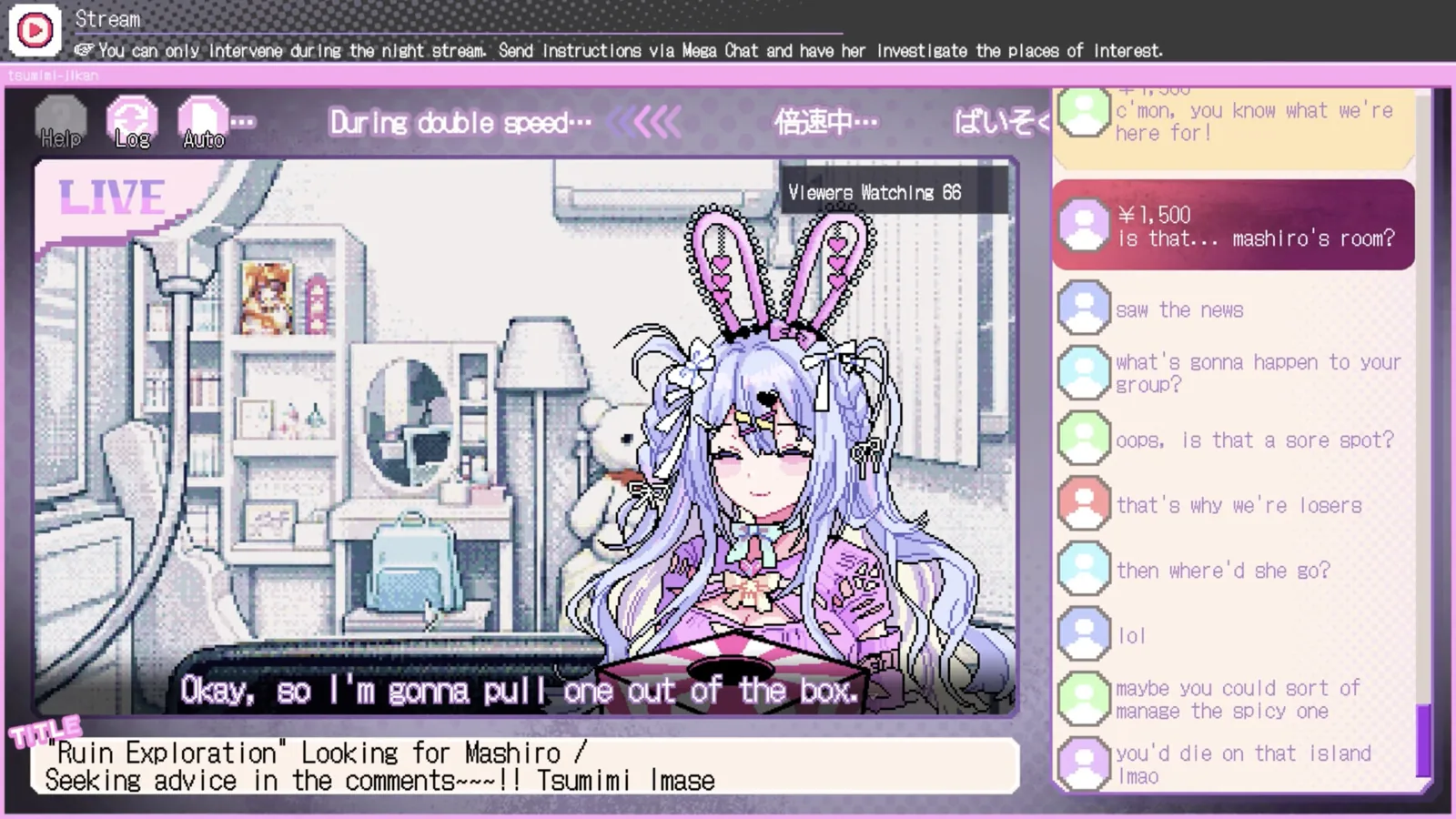
Table of Contents
Red Chat Ritual: TSUMIMI TIME is a mystery visual novel where you never control the idol — you control her audience. You play a fan of the missing idol Mashiro, watching her partner Tsumimi stream from an abandoned village, and the whole game runs on one repeating rhythm: gather information and money during the day, spend that money inside the stream at night, then prove at the end of each chapter that you understood what you saw. Most of the hands-on detail below comes from the demo builds players have been showing off, because the full game is not out yet; Gematsu reported on 2026-05-21 that it launches October 22. Red Chat Ritual is a Steam release (app 4413070).
The day/night rhythm
Days are for preparation. In the demo footage, morning and afternoon are when you take a work shift to earn cash, browse social media, fan pages and news items, and pull out keywords worth keeping. Work advances the clock, so every shift is a trade: more money to spend later, less time to chase leads.
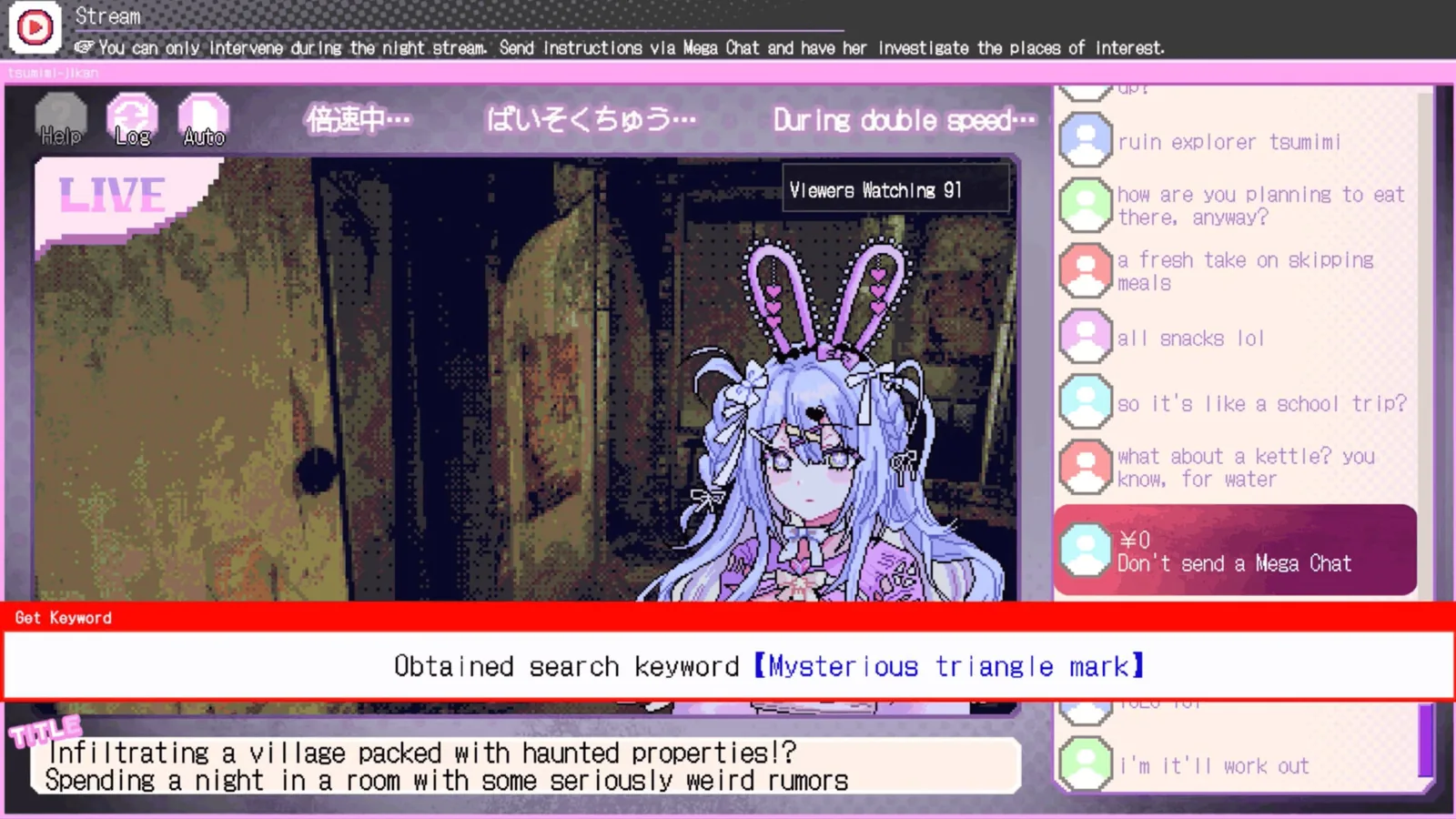
Nights are stream-only. You cannot run errands or investigate once Tsumimi goes live — the night phase exists so you can watch her and decide whether to intervene. That split is the single most useful thing to internalise: if you end the day broke, you spend the night as a spectator.
Mega Chats are the steering wheel
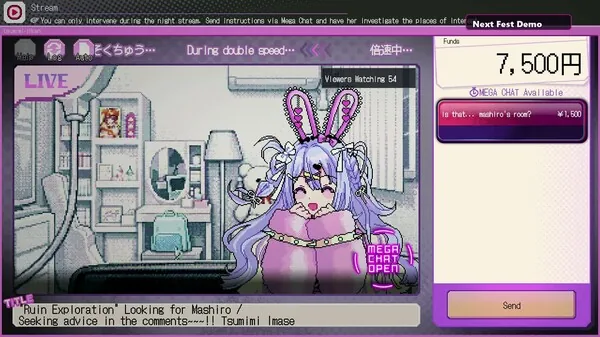
Comments are free. Mega Chats are paid donation messages, and paying is what actually gets Tsumimi to respond to what you say. You can use them to push her toward a clue, warn her away from something dangerous, or just be strange at her — the game does not police your motives, only your balance.
A gameplay walkthrough of the demo describes the money-to-attention relationship as a rough scale, where bigger donations seem to buy more of her focus. Treat that as a player's impression rather than a documented rule. What is clearer is that silence is a legitimate option: in that same chapter-one playthrough, a moment where the player chose not to spend ended better than the alternatives, and some messages get you blocked from her channel outright and end the run. Read the stream first, decide what you want her to do next, and only pay when the message serves that goal.
Gifts versus donations
The demo's streams include a wish list of things Tsumimi wants, and Gematsu's write-up notes that a gift sent late at night can return as an unexpected reaction in the next day's stream. One reviewer who played through chapter one came away feeling gifts were the weaker spend and suggested banking money for chats instead. Those two accounts are not really in conflict — gifts read as a slower payoff that lands later, while Mega Chats give you influence in the moment. When cash is tight, spend on the message that moves the investigation.

The chapter-end deduction
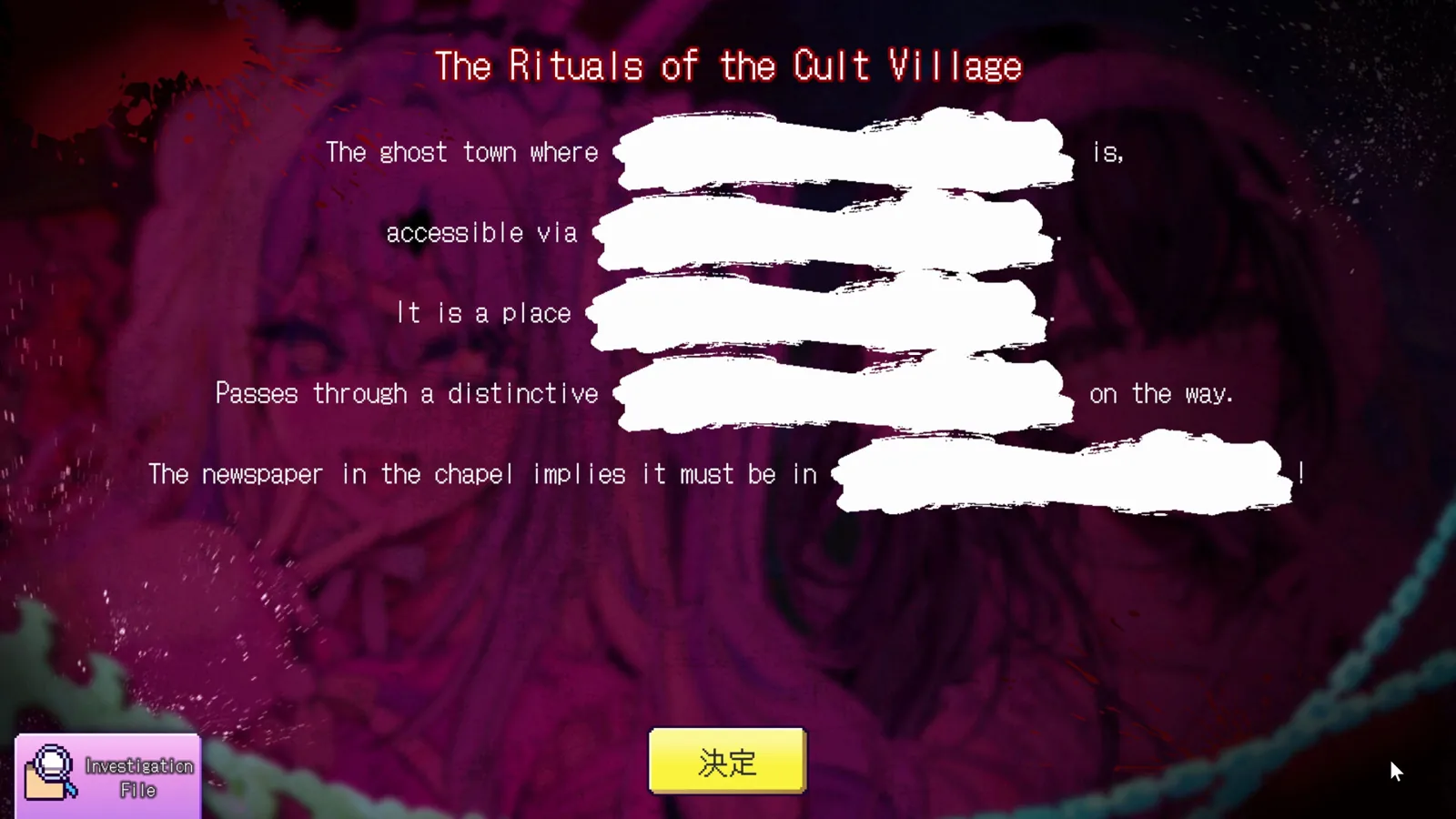
Each chapter closes with an evidence-organising sequence where you fill in blanks using what you collected. Get them wrong and you land on a bad end. The same reviewer found some blanks had no option that fit grammatically, so answer from your investigation file rather than from the shape of the sentence — and save before you start filling anything in. Recovering from a bad end means reloading a save, and the demo build that reviewer played offered no way to skip dialogue you had already seen, which makes retries slow.
What the demo covers, and what the full release adds
The playable demo is chapter one; the walkthrough above runs six in-game days. Gematsu describes the finished game as spanning roughly a two-week day-and-night cycle, with about three hours per playthrough and four to five hours total across multiple endings. Your interventions, investigation and deductions branch the story, so a single run will not show you everything. The reviewer noted the final demo was set for September 28, so check which build you have before comparing notes with other players.
Practical habits
- Buy information, not comfort. Prioritise the Mega Chats that push the mystery forward over wish-list shopping until you know what a gift actually changes.
- Keep a mental shortlist of unresolved keywords. The chapter-end fill-in-the-blank draws on them directly.
- Expect a cluttered interface. A Steam forum poster said the UI felt overwhelming at first but that the mechanics came intuitively even without much of a tutorial, which matches most demo impressions.
- If a deduction seems impossible to answer, stop guessing and re-read your collected entries; guessing is how players report landing on bad ends.
- Do not expect the horror to come from jump scares. The reviewer's take is that the tension sits in the mystery and in Tsumimi's choices, not in anything threatening you directly.
For the demo's own discussion thread and player theories, see the Steam community thread; for the developer-facing description of the loop, endings and play time, see Gematsu's announcement coverage.
Related Articles
Continue Reading
guide: TSUMIMI TIME demo tips
A practical first-look guide to the Red Chat Ritual TSUMIMI TIME demo: the day/night loop, Mega Chats, clues, gifts and endings.
Walkthrough: Demo Tips and Clue Basics
A practical walkthrough for Red Chat Ritual's demo: how the day loop, Mega Chats, keywords and investigation file fit together.

Tsumimi: The Streamer at the Center
Who Tsumimi is in Red Chat Ritual – TSUMIMI TIME: the streamer you watch, how comments and Mega Chats shape her story, and what's known before launch.
reddit talk before the October 22 launch
Searching Reddit for Red Chat Ritual? Here's where community talk stands before the October 22, 2026 launch, plus the game details people keep asking about.
TSUMIMI TIME Demo – What You Can Play
What the TSUMIMI TIME demo covers, how its day-night loop works, what carries into the full game, and practical tips for a first run.
is it yuri? What the demo says so far
Red Chat Ritual is it yuri? As of 2026-10-17 the Steam page calls it a psychological horror adventure, not a romance. Here is what demo players report.